Introduction to EV Charger Installation in Malaysian Stratified Properties
Transitioning to an electric vehicle (EV) in Malaysia is an exciting milestone, but for the roughly 40% of urban dwellers residing in high-rise stratified buildings—condominiums and apartments—installing a home EV charger presents unique challenges. Unlike landed property owners who simply tap into their private distribution boards, strata residents must navigate Joint Management Bodies (JMB) or Management Corporations (MC), strata laws, existing electrical infrastructure capacity, and strict Malaysian safety regulations.
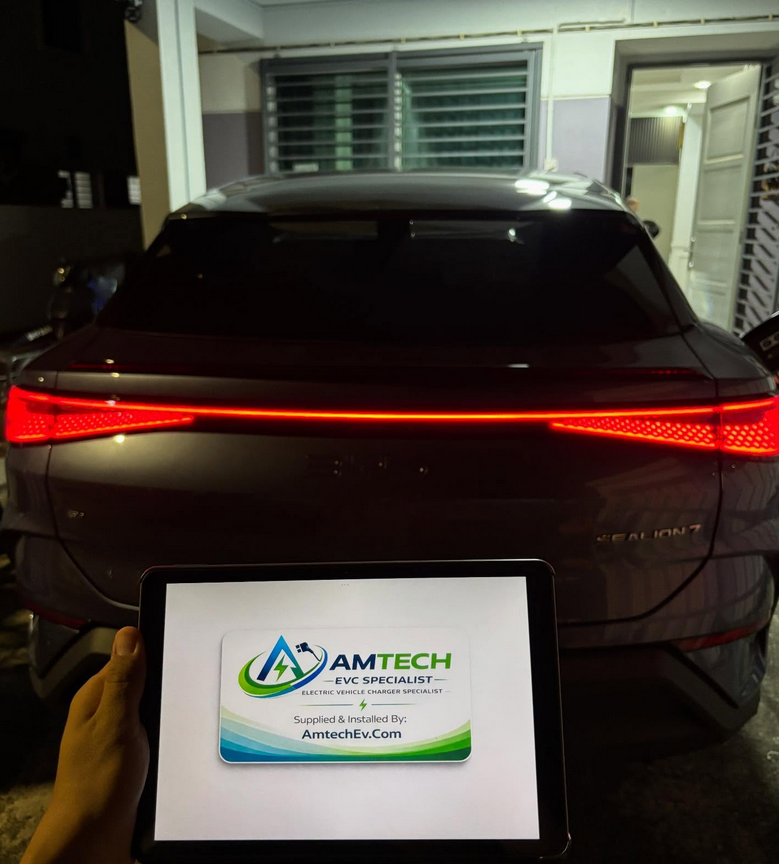
At Amtech EV (amtechev.com), we specialize in end-to-end EV charger supply, professional consultation, and Suruhanjaya Tenaga (ST)-certified installations. This comprehensive master guide breaks down everything Malaysian condo and apartment residents need to know to successfully secure JMB approval, ensure electrical safety compliance, and run a dedicated EV charging setup.
The Malaysian Regulatory & Safety Framework
Safety is non-negotiable when dealing with high-amperage continuous loads like EV charging. In Malaysia, any electrical installation exceeding standard domestic usage must comply strictly with national statutory bodies and technical codes:
- Suruhanjaya Tenaga (Energy Commission): Legally mandates that all EV charging equipment installations must be performed by a Suruhanjaya Tenaga-certified electrical contractor. DIY installations or unauthorized wiring are illegal under the Electricity Supply Act 1990.
- MS IEC 61851 & MS IEC 62196: The governing standards for electric vehicle conductive charging systems and plug interfaces (Type 2 for AC charging, CCS2 for DC fast charging).
- Protection Against Earth Leakage: Suruhanjaya Tenaga guidelines mandate either a dedicated Type B Residual Current Circuit Breaker (RCCB) or a Type A RCCB paired with a 6mA DC residual direct current detection device to prevent smooth DC fault currents from blinding the circuit breaker.
- Dedicated Earthing System: The installation must maintain a robust earth resistance reading (typically below 10 ohms via a dedicated TT earthing rod or sub-main bonding) to ensure user safety.
- Jabatan Bomba dan Penyelamat Malaysia (JBPM): Fire safety protocols require clear risk assessments, especially for basement parking bays, ensuring charging units do not obstruct fire escape routes and are equipped with appropriate thermal management and emergency isolation switches.
Understanding TNB Supply, Power Capacity & Metering Options
Before approaching your JMB, you must understand your building's electrical setup and how your electricity consumption will be metered and billed by Tenaga Nasional Berhad (TNB).
Single-Phase vs. Three-Phase Supply
Most older apartments feature single-phase electricity supply (supporting up to 32A or 7.4kW charging). Newer condominiums typically offer three-phase supply, allowing for high-speed AC wallboxes operating at 11kW (16A) or 22kW (32A). However, check your car's onboard charger (OBC) capability—many popular EVs max out at 7.4kW single-phase or 11kW three-phase AC.
Sub-Metering vs. Tapping Direct from Home Meter
There are three primary wiring topologies approved in Malaysian stratified buildings:
- Direct Line from Unit's Distribution Board (DB): Ideal if your designated parking bay is directly below or adjacent to your unit (e.g., lower podium levels). The cable runs from your home DB straight to your bay, meaning consumption is billed under your existing TNB residential account (Tariff A).
- Sub-Metering via Building's Common Property Supply: If your parking bay is far from your unit, the charger is wired to the building's common TNB meter, and a smart sub-meter measures your exact kWh consumption. The JMB/MC then bills you monthly based on actual usage.
- Dedicated TNB Individual Meter (Surcaj/New Account): In advanced developments, TNB allows a direct individual smart meter installation for the EV charger bay, billed directly to the owner under Domestic Tariff A.
Step-by-Step Guide to Securing JMB / MC Approval
Navigating strata politics is often harder than the engineering work itself. Follow this structured roadmap to secure approval without friction:
- Step 1: Conduct a Feasibility Assessment. Hire a certified specialist like Amtech EV to inspect your parking bay distance from the electrical riser, check available power capacity, and propose a compliant cabling route.
- Step 2: Prepare a Professional Proposal Document. Submit a formal application to the JMB/MC containing:
- EV charger technical specifications (CE certified, smart load balancing capabilities).
- Single-Line Diagram (SLD) endorsed by a Competent Electrical Engineer.
- Suruhanjaya Tenaga contractor certificate and insurance coverage proof.
- Proposed cable tray routing, aesthetic management, and fire safety compliance notes.
- Step 3: Agree on Billing & Liability. Clarify how electricity will be paid (sub-metering reimbursement or direct meter) and sign a Memorandum of Understanding (MoU) regarding property maintenance and liability indemnity.
- Step 4: Installation & Commissioning. Once approved, schedule the installation. Amtech EV handles the complete setup, insulation testing, and issuance of the Certificate of Testing.
Financial Breakdown: Estimated Costs in Malaysia
Transparency is key when budgeting for a home EV charger installation in a strata property. Below is a detailed cost matrix reflecting current Malaysian market rates (in RM):
| Cost Component | Description / Specifications | Estimated Cost Range (RM) |
|---|---|---|
| EV Smart Wallbox (7.4kW - 22kW) | Type 2 tethered/socketed unit with OCPP, RFID, or App control | RM 3,000 - RM 7,000 |
| Suruhanjaya Tenaga Certified Installation | Labor, mounting, DB protection (Type B RCCB / MCB), cabling | RM 1,200 - RM 3,500 |
| Long-Run Cabling & Trunking (Stratia Run) | Armoured cables (XLPE/SWA/PVC) per meter for long basement runs | RM 25 - RM 70 per meter |
| Smart Sub-Meter & Billing System | MID-approved digital kWh meter for JMB reimbursement tracking | RM 600 - RM 1,500 |
| JMB Administrative / Deposit Fee | Refundable security deposit and engineering review fee | RM 500 - RM 2,000 |
Pro-Tip on Government Tax Relief: Under Budget 2024 & 2025 extensions, individual taxpayers in Malaysia can claim LHDN personal income tax relief of up to RM2,500 for EV charging equipment purchase, installation, rental, or hire-purchase fees (valid until year of assessment 2027). Keep your official invoices from certified vendors like Amtech EV!
Frequently Asked Questions (FAQ)
1. Can my JMB legally reject my EV charger installation request?
While JMBs cannot arbitrarily ban EVs, strata management has a legal duty under the Strata Management Act 2013 to protect common property and ensure building safety. They can reject poorly prepared applications that lack certified engineering drawings (SLD), pose fire hazards, or overload common electrical risers. Partnering with Amtech EV ensures your submission meets all legal and engineering standards required for smooth approval.
2. What happens to my EV charger if I sell my condominium unit?
An installed wallbox is considered a permanent fixture or chattel attached to the property. Most homeowners either factor the EV charger into the property selling price as a high-value selling point, or negotiate to de-install and relocate it, provided the JMB and electrical risers are restored to their original condition.
3. Do I need a three-phase supply upgrade for a home EV charger?
Not necessarily. A single-phase 7.4kW charger (32A) can comfortably replenish a 60kWh EV battery from 20% to 100% in roughly 7 hours overnight. However, if you own a larger EV battery (e.g., 80kWh+) or want faster turnaround times, a three-phase 11kW or 22kW charger is recommended, provided your condo's electrical infrastructure and TNB supply support it.
4. How is electricity billed if my parking bay is far from my apartment unit?
For bays located far from home distribution boards, certified contractors install a smart MID-approved sub-meter connected to the building's common electrical supply. The sub-meter tracks your exact kWh usage monthly, and you reimburse the JMB based on prevailing TNB domestic tariff rates.