Introduction to Electric Vehicle Charging in Malaysian Stratified Properties
Transitioning to electric mobility in Malaysia's rapidly expanding urban centers presents a unique operational and legal challenge for EV owners residing in stratified properties. While landed property owners can install a home wallbox with relative ease, apartment and condominium residents must navigate a complex matrix of strata management bylaws, Tenaga Nasional Berhad (TNB) metering limitations, and stringent electrical safety regulations set by Suruhanjaya Tenaga (Energy Commission).
At Amtech EV (amtechev.com), we frequently encounter misconceptions regarding shared-property power capacities, legal liabilities under the Strata Management Act 2013 (SMA 2013), and the precise engineering protocols required to prevent electrical overloads. This comprehensive technical guide outlines the precise steps, safety standards, and financial breakdowns required to successfully install a compliant EV charger in your Malaysian condominium or apartment.
Regulatory & Safety Standards: Suruhanjaya Tenaga & Bomba Requirements
In Malaysia, the installation of an Electric Vehicle Supply Equipment (EVSE) is strictly governed by national electrical codes. Unauthorized or DIY installations pose severe fire and electrocution hazards, rendering insurance policies void and violating national law.
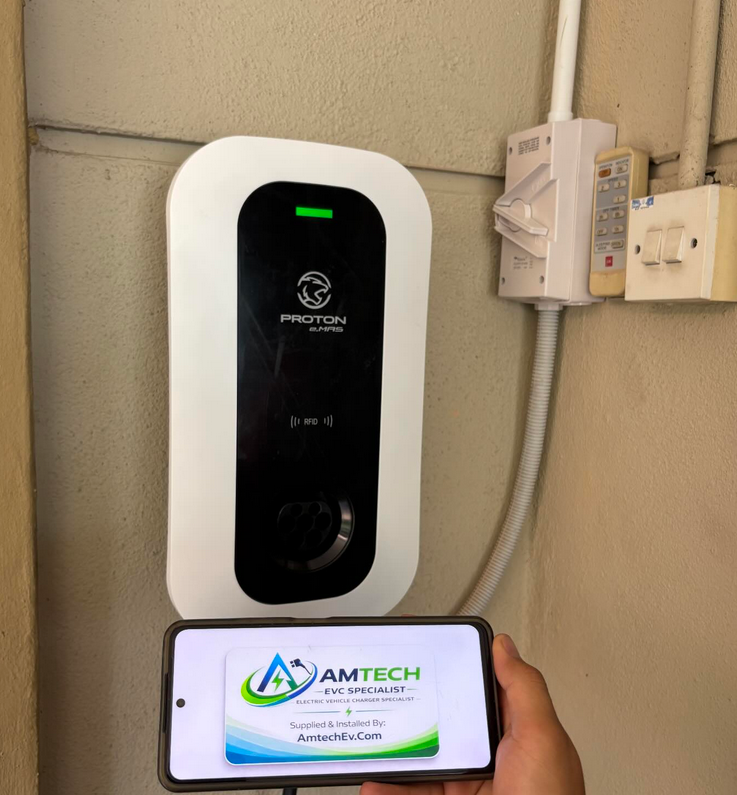
- Suruhanjaya Tenaga (ST) Guidelines: All EV chargers must be installed by a Suruhanjaya Tenaga-certified electrical contractor (Perakuan Kompetensi). Amtech EV’s certified engineers ensure full compliance with the Guidelines for EV Charging System (EVCS) in Malaysia.
- MS IEC 61851 & MS IEC 62196: Chargers must adhere to conductive charging standards and feature Type 2 sockets (AC charging) or CCS2 plugs (DC fast charging) suited for Malaysian vehicle fleets.
- Electrical Protection (Type B RCCB): Unlike standard household circuits, EV charging requires robust protection against DC residual currents. Installations must utilize a Type B Residual Current Circuit Breaker (RCCB) or a combination of Type A RCCB with integrated 6mA DC residual direct current detection, preventing blinding of the safety switch under fault conditions.
- Dedicated Earthing System: A dedicated TT or TN-S earthing system must be established, maintaining an earth resistance reading of below 10 ohms to guarantee stable trip thresholds during insulation breakdowns.
- Jabatan Bomba dan Penyelamat Malaysia (JBPM): Basement and multi-story carpark installations must comply with fire safety clearances, avoiding emergency egress routes and incorporating appropriate thermal runaway risk assessments.
Navigating JMB / MC Approvals Under the Strata Management Act 2013
Because carpark bays in condominiums and apartments are typically common property or accessory parcels governed by the Joint Management Body (JMB) or Management Corporation (MC), you cannot simply wire a charger directly to the building's main switchboard without formal authorization.
- Conduct a Feasibility Study: Engage a certified specialist like Amtech EV to assess your designated parking bay's distance from the electrical riser room and evaluate available power capacity.
- Submit a Formal Proposal to the JMB/MC: Provide an engineered single-line diagram (SLD), contractor certifications, public liability insurance documentation, and details of the proposed sub-metering system (RFID or keycard-enabled smart chargers).
- Obtain AGM/EGM Resolution: For permanent modifications to common property (such as core-drilling walls, running cable trays across ceilings, or tapping into the building's incoming supply), approval via an Ordinary Resolution during an Annual General Meeting (AGM) or Extraordinary General Meeting (EGM) is often required.
- Execution & Handover: Upon approval, installation is executed under strict supervision, followed by a joint inspection and handover of sub-meter reading logs to the building management for monthly electricity billing reconciliation.
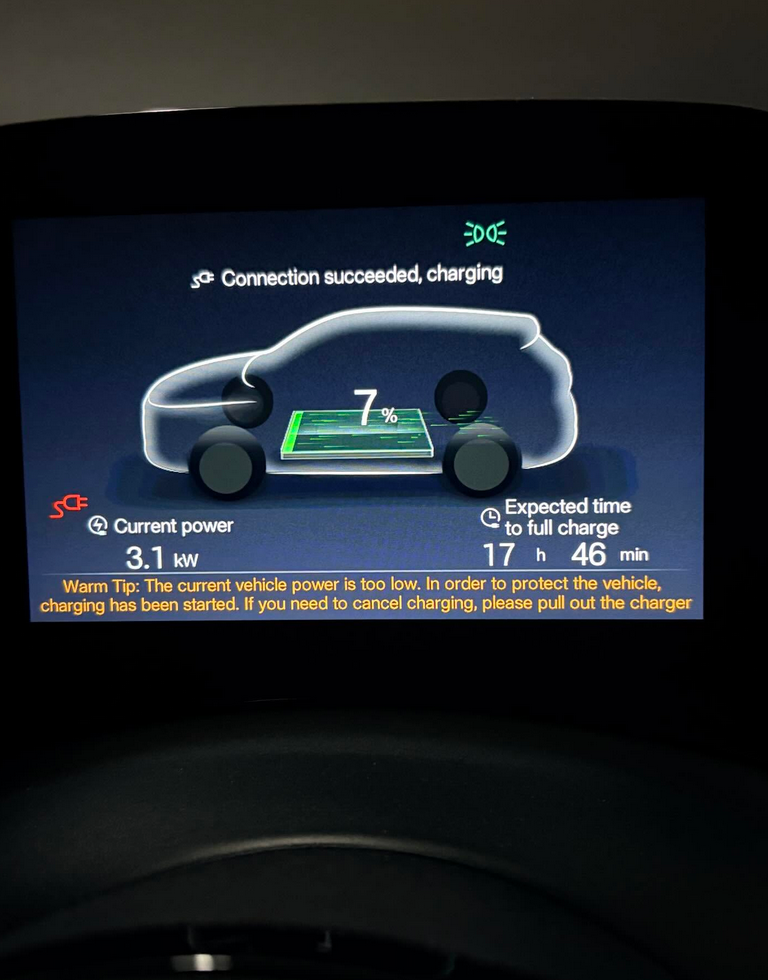
- Single-Phase Supply (230V, 32A): Delivers a maximum charging output of 7.4 kW. This is sufficient for overnight charging, replenishing a 60 kWh battery from 20% to 100% in approximately 7 to 8 hours.
- Three-Phase Supply (400V, 16A to 32A): Delivers charging outputs ranging from 11 kW to 22 kW. Ideal for high-capacity EVs (like the Porsche Taycan or BMW iX) equipped with dual-onboard chargers.
- TNB Tariff A (Domestic): Most residential strata properties fall under Tariff A. While tiered block pricing applies, high-volume EV charging can push consumption into higher blocks (above 600 kWh/month at 51.6 sen/kWh).
- Time-of-Use (ToU) Tariff Synergy: Forward-thinking JMBs and residents should explore TNB's enhanced ToU pilots or future green tariffs, scheduling smart chargers to run during off-peak hours (typically 10:00 PM to 8:00 AM) to drastically lower operational overhead.
Power Supply Architecture: Single-Phase vs. Three-Phase & TNB Tariffs
Understanding your condo's electrical infrastructure determines whether you can install a 7.4kW single-phase charger or a lightning-fast 22kW three-phase wallbox.
Comprehensive Cost Breakdown (Estimated in Malaysian Ringgit - RM)
Installing an EV charger in a high-rise building involves hardware, specialized cabling, structural containment, and engineering labor. Below is an indicative cost matrix for a standard strata installation:
| Cost Component | Description & Specifications | Estimated Range (RM) |
|---|---|---|
| EV Charger Hardware (Smart Wallbox) | 7.4kW - 22kW Wi-Fi/RFID-enabled charger (e.g., ABB, Schneider, Wallbox, or equivalent ST-approved unit) | RM 3,500 - RM 7,500 |
| Cabling & Routing Materials | Heavy-duty XLPE/SWA copper cables (e.g., 3x6mm² or 5x10mm² depending on run length from riser to bay) | RM 1,200 - RM 4,500 |
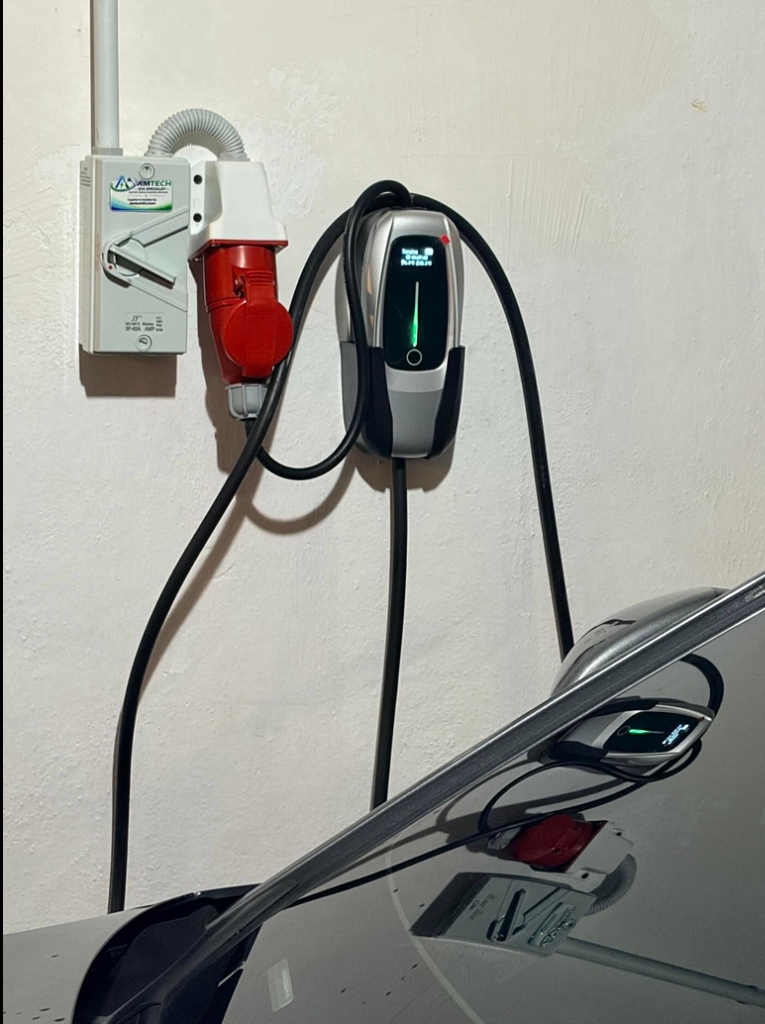
| Safety Protection & Distribution Box | Type B RCCB, MCB, Surge Protection Device (SPD), and lockable weatherproof sub-meter enclosure | RM 800 - RM 2,000 |
| Labor, Engineering & Certification | Core drilling, cable tray installation, earth bonding test, Suruhanjaya Tenaga endorsement, and SLD submission | RM 1,500 - RM 3,000 |
| Total Estimated Investment | Complete turnkey installation (excluding potential TNB overheads) | RM 7,000 - RM 17,000 |
Government Incentives & LHDN Tax Relief
To accelerate green adoption, the Malaysian Government through LHDN provides substantial financial relief. Under current Budget announcements, individual taxpayers are eligible for personal income tax relief of up to RM2,500 on expenses related to EV charging equipment purchase, installation, rental, or hire-purchase subscriptions. This relief is valid until 2027. Keep all official tax invoices and receipts issued by certified contractors like Amtech EV to claim this deduction.
"Safety and compliance are non-negotiable in high-rise strata properties. Investing in professional engineering standards protects your property value, ensures absolute safety for fellow residents, and future-proofs your EV ownership experience." — Amtech EV Engineering Team
Frequently Asked Questions (FAQ)
1. Can the JMB legally reject my application to install an EV charger?
Yes, a JMB or MC can reject an application if the proposed installation compromises common property safety, overloads the building's electrical capacity, or lacks proper engineering certification. However, under good governance principles, rejections must be substantiated with valid technical assessments. Partnering with Amtech EV ensures your proposal meets all engineering bylaws, significantly increasing approval success.
2. How is electricity billed if my charger is connected to the building's main riser?
Amtech EV installs a dedicated, MID-approved digital sub-meter specifically for your charging bay. The building management reads this meter monthly, and you are billed directly based on your exact kWh consumption, either added to your monthly maintenance statement or paid via a pre-paid RFID/app system.
3. What happens if the apartment's main electrical riser has insufficient capacity?
If the building infrastructure lacks spare ampacity, options include load-balancing systems (Dynamic Load Management - DLM) that share available power during peak hours, or requesting a dedicated TNB bulk supply upgrade for the property, coordinated through the JMB.
4. Can I plug my EV into a standard 13A wall socket in the condo parking lot?
Using a standard 13A portable charger (Schuko plug) for extended periods draws continuous high currents that frequently cause wall socket overheating, melting, and electrical fires. Suruhanjaya Tenaga strictly discourages permanent 13A extension cord charging in common areas.