Introduction to High-Rise EV Charging in Malaysia
Transitioning to electric vehicles (EVs) in Malaysia's bustling urban centers like Kuala Lumpur, Penang, and Johor Bahru offers immense long-term savings and environmental benefits. However, for the estimated 60% of urban residents living in high-rise buildings—such as condominiums, apartments, and serviced residences—installing a dedicated home EV charger (Wallbox) presents unique operational, legal, and engineering hurdles. Unlike landed property owners who can simply engage an installer, strata property residents must navigate Joint Management Bodies (JMB), Management Corporations (MC), Tenaga Nasional Berhad (TNB) metering infrastructure, and stringent safety standards set by Suruhanjaya Tenaga (Energy Commission).
At Amtech EV (amtechev.com), we specialize in bridging the gap between strata governance and cutting-edge electrical engineering. This comprehensive technical guide outlines the regulatory pathways, engineering requirements, cost breakdowns, and step-by-step framework required to successfully install a compliant EV charger in your Malaysian high-rise parking bay.
Regulatory & Safety Standards: Suruhanjaya Tenaga & JBPM Compliance
Safety is non-negotiable when dealing with high-amperage, continuous loads such as EV chargers (typically drawing 16A to 32A over several hours). In Malaysia, any electrical installation connected to a supply must comply with the Electricity Supply Act 1990 and regulations enforced by Suruhanjaya Tenaga (ST).
Key Technical Requirements for Strata Installations:
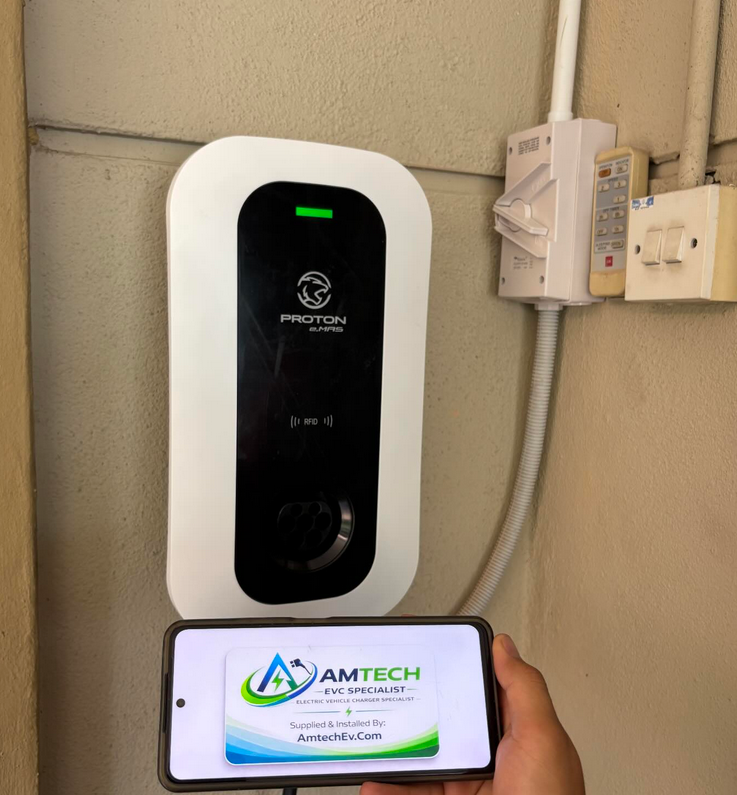
- MS IEC 61851 & MS IEC 62196 Compliance: All installed EV supply equipment (EVSE) must feature standard Type 2 AC charging sockets or tethered cables certified for the Malaysian market.
- Residual Current Device (RCD) Protection: Suruhanjaya Tenaga guidelines mandate either a Type B RCCB (Residual Current Circuit Breaker) or a Type A RCCB accompanied by a 6mA DC residual direct current detecting device to prevent fatal DC fault currents from blinding standard AC breakers.
- Dedicated Earthing: The parking bay sub-main cabling must maintain a dedicated, low-impedance earthing conductor. In certain basement parking scenarios, supplementary local earth rods or equipotential bonding may be required to maintain a TT earthing resistance of under 10 ohms.
- Jabatan Bomba dan Penyelamat Malaysia (JBPM) Guidelines: Fire safety protocols require clear signage, emergency isolation switches accessible to building management, and adherence to basement ventilation standards.
TNB Infrastructure: Single-Phase vs. Three-Phase & Metering Solutions
Power availability is often the primary bottleneck in high-rise buildings. Depending on your vehicle's onboard charger (OBC) capabilities, you will need to choose between a single-phase (up to 7.4kW / 32A) or a three-phase (up to 11kW or 22kW) supply.
How Electricity is Sourced in Stratas:
- Sub-metering from Common Property: The charger connects to the building's common area DB (Distribution Board), and a dedicated sub-meter (often smart-enabled for RFID or app billing) tracks energy consumption for monthly reimbursement to the JMB.
- Direct TNB Individual Metering: Running a sub-main cable directly from the apartment's existing TNB meter panel (often located in a centralized meter room floors away) to the parking bay. This allows homeowners to enjoy direct TNB Domestic Tariff A rates without JMB billing overheads.
Step-by-Step Guide to Securing JMB / MC Approval
Obtaining approval from your JMB or MC requires a professional proposal rather than a casual request. Here is the proven workflow managed by Amtech EV:
- Step 1: Preliminary Site Audit: Our certified electrical engineers assess your parking bay location relative to the nearest electrical riser or meter room, calculating voltage drop and cable run distances.
- Step 2: Engineering Proposal Submission: We prepare a comprehensive endorsement package including Single Line Diagrams (SLD), equipment cut-sheets (certifying ST and CE compliance), and method statements for cable tray routing.
- Step 3: Formal JMB Application: Submit the engineering package to the building property manager for review by the JMB technical sub-committee.
- Step 4: Installation & Commissioning: Upon approval, certified wiremen execute the installation, followed by rigorous insulation resistance and loop impedance testing before issuing the Certificate of Completion and Testing (C&T).
Cost Breakdown: What to Expect in Ringgit Malaysia (RM)
Budgeting for a high-rise EV charger installation involves hardware, specialized cabling, safety protections, and labor. Below is an indicative cost matrix for a standard 7kW single-phase installation:
| Cost Component | Description | Estimated Range (RM) |
|---|---|---|
| EV Wallbox Hardware | Smart 7kW charger (e.g., Schneider, ABB, Wallbox) with OCPP & RFID | RM 3,500 – RM 6,000 |
| Cabling & Tray Work | Heavy-duty XLPE/SWA/PVC copper cable (per meter run from meter room) | RM 40 – RM 90 per meter |
| Protection Devices | Type B RCCB, MCB/RCBO enclosures, and emergency stop button | RM 600 – RM 1,500 |
| Smart Sub-Meter | Billing-grade digital kWh meter with Modbus or cellular telemetry | RM 800 – RM 1,800 |
| Labor & Certification | ST-certified wireman installation, testing, and endorsement | RM 1,200 – RM 3,000 |
Government Incentives & Tax Relief (LHDN)
To accelerate green mobility, the Malaysian Government via LHDN (Lembaga Hasil Dalam Negeri) offers individual income tax relief of up to RM2,500 for the purchase, installation, rental, or hire-purchase subscription of EV charging equipment. This relief is valid through assessment year 2027. Ensure you retain all invoices from certified contractors like Amtech EV to claim this deduction.
Frequently Asked Questions (FAQ)
1. Can my JMB legally reject my EV charger installation request?
While JMBs/MCs cannot arbitrarily ban EV chargers, they have a legal duty to ensure building safety, structural integrity, and fair use of common property. Rejections typically stem from incomplete technical documentation or capacity limits. Providing an ST-certified engineering proposal from Amtech EV usually overcomes these hurdles.
2. What is the maximum cable run allowed from the meter room to a condo parking bay?
There is no absolute physical limit, but electrical regulations dictate that voltage drop must not exceed 4% of the nominal voltage (230V). For long runs exceeding 50 to 80 meters, engineers must upsize the copper cable cross-sectional area (e.g., from 6mm² to 10mm² or 16mm²) to mitigate resistance and heat generation.
3. Do I need a smart meter or can I use a standard sub-meter?
If your charger is connected to the building's common utility meter, a smart billing sub-meter is essential. It allows the JMB to accurately bill you for exact kWh consumed without guesswork. If you pull a direct line from your own apartment's TNB meter, a billing sub-meter is unnecessary as TNB bills you directly.
4. Are portable chargers (Tier 1 3-pin plugs) safe to use daily in condominiums?
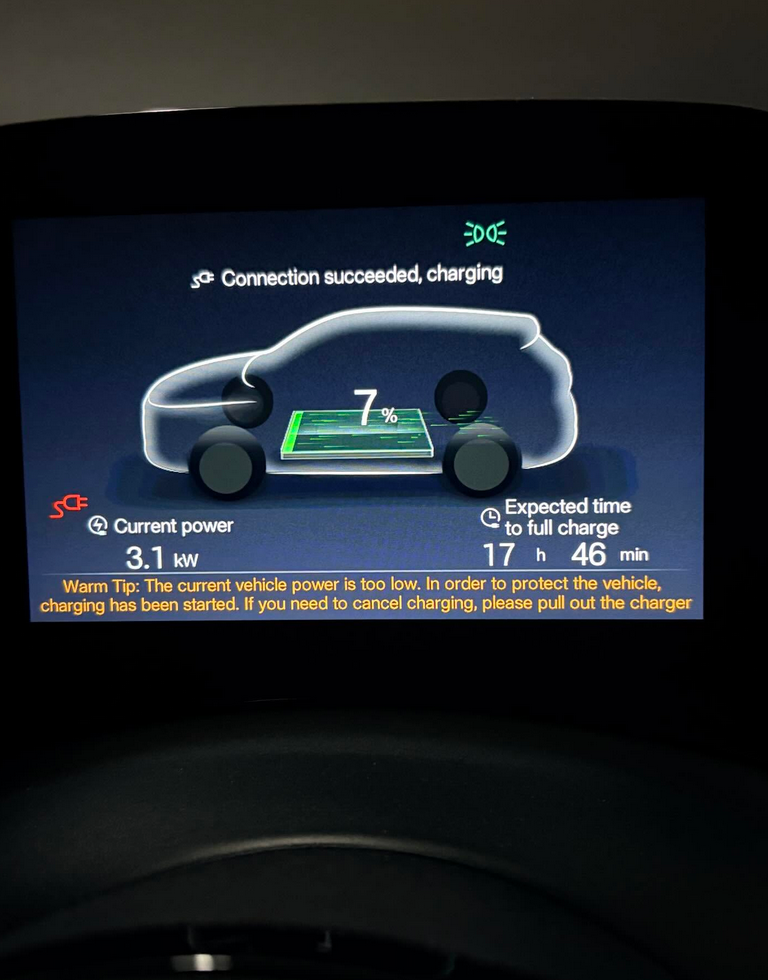
Using 3-pin portable chargers plugged into standard wall sockets for extended periods (6 to 10 hours at 10A) often stresses older building wiring, leading to socket overheating, thermal degradation, and potential fire hazards. A dedicated Type 2 AC Wallbox installed on a dedicated breaker is strongly recommended for safety and longevity.