Introduction: The EV Revolution in Malaysian Strata Living
As electric vehicles (EVs) rapidly gain traction across Malaysia, transitioning from an alternative choice to mainstream mobility, apartment and condominium residents face a unique infrastructure challenge. Unlike landed property owners who can seamlessly hook up a 7.4kW or 22kW wallbox to their porch, high-rise dwellers must navigate complex strata regulations, Joint Management Body (JMB) or Management Corporation (MC) approvals, technical load balancing, and stringent electrical safety codes set by Malaysian authorities.
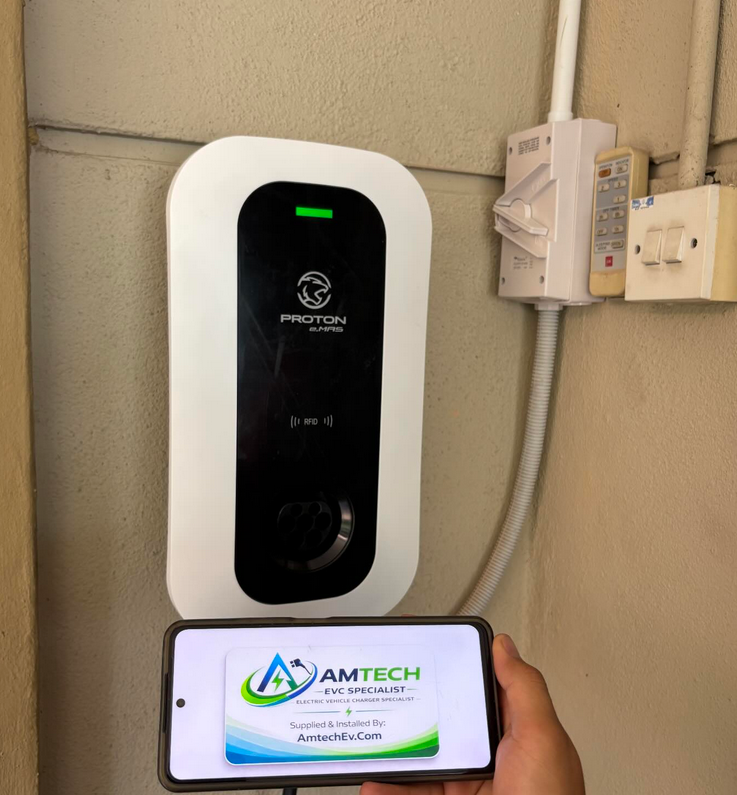
At Amtech EV (amtechev.com), we have successfully guided hundreds of strata residents, JMBs, and property managers through the intricacies of safe, compliant EV charger installations. This comprehensive master guide outlines everything you need to know about navigating JMB/MC approvals, technical requirements under Suruhanjaya Tenaga (Energy Commission), Tenaga Nasional Berhad (TNB) supply integration, and realistic cost breakdowns in Ringgit Malaysia (RM).
Understanding Malaysian Regulations & Safety Standards
Installing an EV charger in a high-rise building is not a standard DIY electrical job. It involves high continuous currents drawn over several hours, requiring strict adherence to national safety codes to mitigate fire risks and protect the building's shared infrastructure.
Suruhanjaya Tenaga (ST) & MS IEC Standards
Under Malaysian law, any electrical installation connected to a fixed supply must comply with the MS IEC 61851 standard for electric vehicle conductive charging systems and MS IEC 62196 for plugs, socket-outlets, and vehicle connectors (typically Type 2 for AC charging in Malaysia). Furthermore, all installations must be executed and certified by a Suruhanjaya Tenaga-registered Electrical Contractor.
Critical Safety Components Required:
- Type B RCCB (or Type A + 6mA DC protection): EV charging circuits can potentially introduce smooth DC residual currents. Standard Type AC RCCBs will blind themselves and fail to trip under DC fault conditions, posing severe electrocution risks. ST strictly mandates Type B protection or a certified Type A RCD paired with a 6mA DC residual detector.
- Dedicated Earthing: Proper earthing (< 10 ohms resistance) via a dedicated TT earthing rod or building structural tie-in is paramount.
- JBPM Guidelines: Jabatan Bomba dan Penyelamat Malaysia (Fire and Rescue Department) mandates clear emergency shutdown protocols and non-flammable cable routing within enclosed carparks.
The 5-Step Process to Get Approval from JMB / MC
Convincing your condo management to approve an EV charger installation requires presenting a professional, highly technical proposal. Here is the proven step-by-step framework to secure a green light from your JMB or MC:
- Conduct a Preliminary Technical Assessment: Before approaching the management office, engage a certified specialist like Amtech EV to assess your parking bay's physical distance from the main distribution board (MDB) or sub-meter room.
- Submit a Formal Proposal to JMB/MC: Provide a complete engineering proposal package containing:
- Single Line Diagram (SLD) endorsed by a Competent Person.
- Equipment specification sheets (showing CE/SIRIM compliance, overvoltage protection, and thermal throttling).
- Method statement for cable tray routing and core-drilling (if applicable).
- Proof of professional liability insurance held by the installer.
- Establish the Billing & Metering Mechanism: Discuss how electricity consumption will be billed. Options include tapping directly into your existing apartment unit's TNB meter (via sub-metering), installing a dedicated TNB individual meter, or utilizing smart commercial chargers with RFID/app-based billing where the JMB collects reimbursements.
- Sign a Memorandum of Understanding (MoU) / License Agreement: Many JMBs require a signed agreement outlining liability, maintenance responsibilities, and conditions for eventual reinstatement when you move out.
- Execution and Testing (Borang Q / ST Sign-off): Upon approval, the installation proceeds, followed by rigorous insulation testing, loop impedance testing, and certification.
TNB Tariffs, Sub-Metering, and Smart Energy Management
When charging at home in a condo, understanding your electricity cost is crucial to maximizing savings compared to public DC fast chargers.
- TNB Domestic Tariff A: Most high-rise residents fall under Tariff A, featuring a tiered block rate ranging from RM0.218 per kWh (first 200 kWh) up to RM0.571 per kWh (above 900 kWh). If your total household consumption plus your EV pushes you into the higher tiers, your charging cost per kWh increases.
- Time-of-Use (ToU) Tariff: For larger developments or commercial strata titles, ToU tariffs offer cheaper electricity rates during off-peak hours (typically 10:00 PM to 8:00 AM), making overnight EV charging exceptionally economical.
- Dynamic Load Management (DLM): In buildings with constrained electrical capacity, Amtech EV installs DLM hardware. This dynamically throttles the charger's output current in real-time based on the household's or building's active power consumption, preventing main breaker trips.
Comprehensive Cost Breakdown (RM)
Transparency is key when budgeting for a strata EV charger installation. Below is a realistic cost matrix reflecting current Malaysian market rates for a standard 7.4kW single-phase or 22kW three-phase setup.
| Cost Component | Description | Estimated Range (RM) |
|---|---|---|
| EV Wallbox Hardware | Smart Charger (7.4kW - 22kW, Wi-Fi/RFID enabled) | RM 3,000 - RM 7,000 |
| Surmi/ST Compliant Protection | Type B RCCB, MCB, Surge Protection Device (SPD) | RM 600 - RM 1,500 |
| Cabling & Tray Works | Heavy-duty XLPE/SWA armored cable (per meter run from meter room to bay) | RM 1,500 - RM 5,000+ (depends on distance) |
| Engineering & Certification | SLD endorsement, testing, and ST-registered contractor labor | RM 800 - RM 2,000 |
| JMB Deposit / Core Drilling | Management administrative fees, refundable deposit, core drilling permits | RM 300 - RM 1,000 |
| Total Estimated Investment | Complete End-to-End Compliant Installation | RM 6,200 - RM 16,500 |
Pro Tip on Tax Relief: Don't forget that under LHDN individual income tax guidelines, expenses incurred for EV charging equipment installation (including hardware, cabling, and certified labor) qualify for tax relief of up to RM2,500, valid through assessment year 2027!
Frequently Asked Questions (FAQ)
1. Can my JMB legally reject my request to install an EV charger?
While JMBs cannot arbitrarily ban EVs, they have a legitimate legal duty under the Strata Management Act 2013 to protect common property and electrical safety. If your proposal lacks proper engineering certification, compromises common corridors, or overloads the building's electrical capacity, they can lawfully reject it until compliant engineering solutions (like Load Management Systems) are provided.
2. How do I pay for the electricity used if my charger is connected to the building's common supply?
There are two primary methods: Either the installation runs via a sub-meter connected directly to your own apartment unit's TNB meter (so it bills directly to your monthly apartment bill), or a smart commercial wallbox with built-in metering is installed, where you reload credits via an app and the JMB recovers the exact electricity cost.
3. What is the difference between a 7.4kW single-phase charger and a 22kW three-phase charger for a condo?
A 7.4kW charger draws up to 32A on a single-phase supply, which is sufficient for overnight charging of most EVs (fully charging a 60kWh battery in roughly 8 hours). A 22kW charger requires a three-phase supply and faster onboard vehicle chargers. Most condo parking bays only have single-phase availability unless a heavy-duty three-phase sub-main cable is pulled from the main switchboard.
4. Why is a Type B RCCB mandatory for EV charging?
EV onboard chargers convert AC to DC power. In the rare event of an internal insulation failure, smooth DC residual currents can flow back into the building's AC circuit. Standard Type AC and Type A RCDs cannot detect smooth DC fault currents and will become 'blind', failing to trip during an earth leakage fault. A Type B RCCB ensures guaranteed tripping protection against both AC and DC residual currents.
5. How does Amtech EV assist with the JMB approval process?
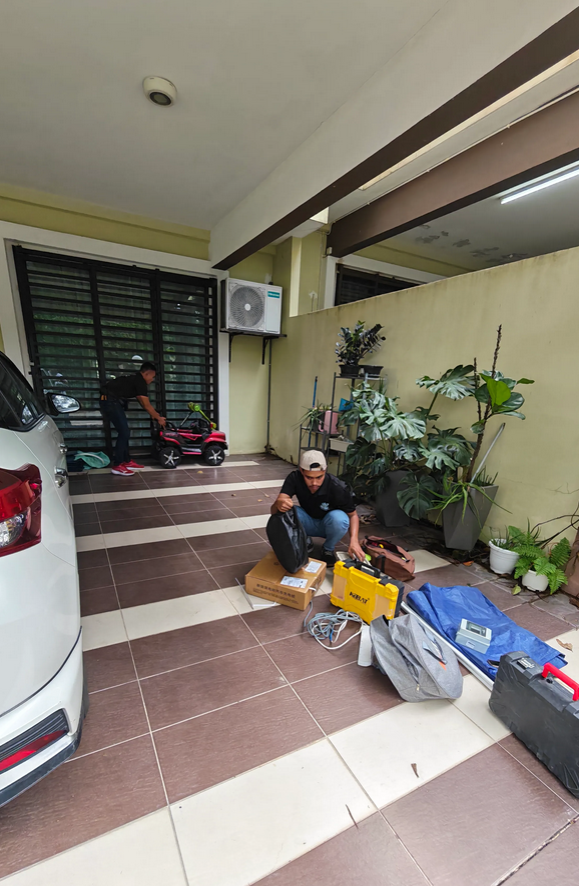
Amtech EV provides a turnkey service. We conduct site surveys, draft professional engineering proposals with Single Line Diagrams (SLDs), interface directly with your building manager or property consultant to answer technical queries, and execute the installation strictly adhering to Suruhanjaya Tenaga and TNB guidelines.